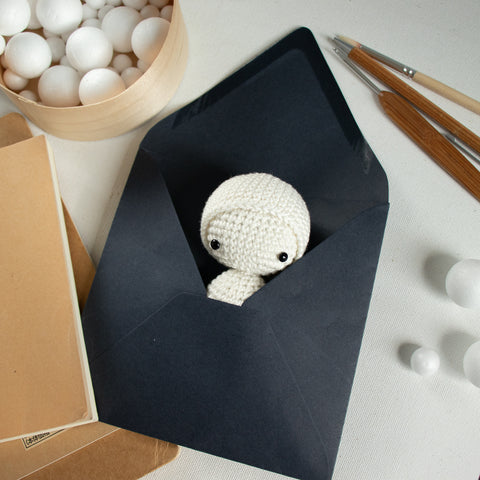

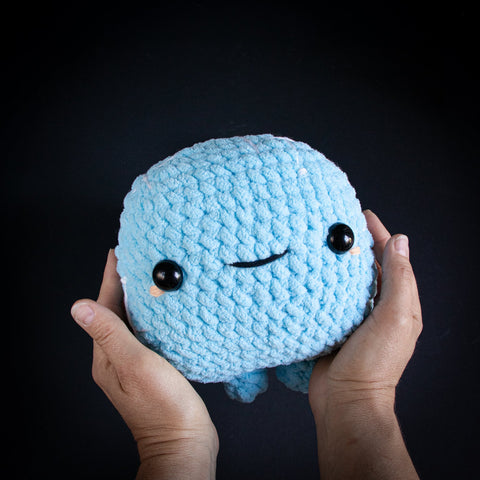
If you take a look at the amigurumi world today, one thing becomes obvious very quickly: chenille yarn is everywhere. Instagram feeds, Etsy shops, Pinterest boards – fluffy animals with big eyes and barely visible stitches seem to dominate the scene. And more often than not, they’re made from chenille. So… why is that?
It’s incredibly soft | Let’s start with the obvious: chenille yarn is extremely soft. It practically begs to be hugged. For amigurumi – pieces that are often meant to be cuddled – softness instantly translates into comfort, quality and emotional appeal.
Fast and satisfying results | Chenille yarn is thick, which means larger stitches, quicker progress, faster finished projects. Especially for beginners, this can be a huge confidence boost. Instead of a long-term commitment, you get a finished amigurumi after just a few evenings.
It hides imperfections | Uneven tension? Slightly messy stitches? Chenille is very forgiving. The fluffy texture smooths over small mistakes, which takes pressure off and makes the whole process feel more relaxed and approachable.
Social media loves fluff | Chenille photographs beautifully: soft surfaces, clean silhouettes, instant “cute factor”. On screen, chenille often looks more plush and emotional than cotton yarn. That makes it perfect for social media – and visibility matters.
It feels modern and trendy | Chenille represents: a contemporary amigurumi style, a move away from traditional crochet aesthetics, something new and exciting. For many makers, it’s a way to refresh their creative language.
But popularity isn’t the whole story
As understandable as the chenille hype is, popularity doesn’t automatically equal suitability. Behind the fluff lie important questions about durability, sustainability and long-term use. And that’s exactly where we will dive deeper:
What the fluff doesn’t tell you
Chenille yarn looks soft, feels luxurious, and photographs beautifully. It’s easy to see why so many crocheters fall in love with it at first touch. But once the initial excitement fades, some less cozy truths start to show.
This isn’t about bashing chenille. It’s about looking beyond the fluff and understanding what this yarn is — and what it isn’t.
1. Chenille is usually synthetic
Most chenille yarns are made from polyester. That means they’re plastic-based, derived from fossil fuels, and far removed from natural fiber cycles. From an environmental perspective, this raises a few issues:
- energy-intensive production
- no biodegradation
- contribution to microplastic pollution
Once a chenille amigurumi reaches the end of its life, it doesn’t gently return to the earth. It stays. For a very long time.
2. Durability is not chenille’s strong suit
Despite feeling plush and sturdy, chenille can be surprisingly fragile:
- the fuzzy fibers can shed
- threads may snap when frogged
- repeated pulling weakens the core
If you’ve ever tried to undo stitches in chenille, you know the struggle. Often, once it’s damaged, there’s no going back.
3. Repairs are difficult — sometimes impossible
Natural yarns can often be reworked, mended, gently repaired. Chenille? Not so much. Once fibers are broken or worn down, repairs tend to be visible or ineffective. This limits the lifespan of handmade pieces and can turn small issues into permanent flaws.
4. Microplastics: the invisible problem
Every time synthetic yarn is washed, tiny plastic fibers can be released into the water system. These microplastics pass through wastewater treatment, end up in rivers and oceans and enter food chains. Amigurumi may not be washed as often as clothing, but the issue remains — especially over time.
5. Limited stitch definition
This is more of a creative downside, but an important one:
- stitch patterns disappear
- shaping details get lost
- texture becomes uniform
For some projects, that’s exactly the goal. For others, it can feel limiting — especially if you enjoy seeing your craftsmanship clearly.
None of this makes chenille “bad”
It’s important to say this clearly: Chenille yarn isn’t evil. It has its place. It brings joy. It makes crochet accessible and playful. But it also comes with trade-offs — especially when it comes to longevity and sustainability. Understanding those trade-offs allows us to choose more intentionally.
Looking ahead
In the next part of this series, I’ll share why I personally prefer working with natural materials and how that choice influences not just my projects, but the way I think about handmade work as a whole. Because mindful crochet isn’t about perfection. It’s about awareness.