
If you crochet, you’ve probably asked yourself this question more than once: Which yarn should I use? Chenille, cotton, wool, acrylic, blends – the options are endless. And often, the final decision isn’t purely technical. It’s about how the yarn feels in your hands. How it looks. Whether it’s trendy. Whether it sparks joy.
In the amigurumi world, the current answer seems obvious: chenille yarn. Soft, fluffy, chunky – and everywhere. But is it always the best choice? Short answer: it depends. And that’s exactly what this blog series is about.
Yarn choice is never just technical
At first glance, choosing yarn seems simple: hook size, gauge, color palette. But yarn also affects:
- how long a piece will last
- how it feels to touch and use
- whether it can be repaired
- and its environmental footprint
Every project carries small decisions. Not about right or wrong – but about awareness.
Chenille: the fluffy favorite?
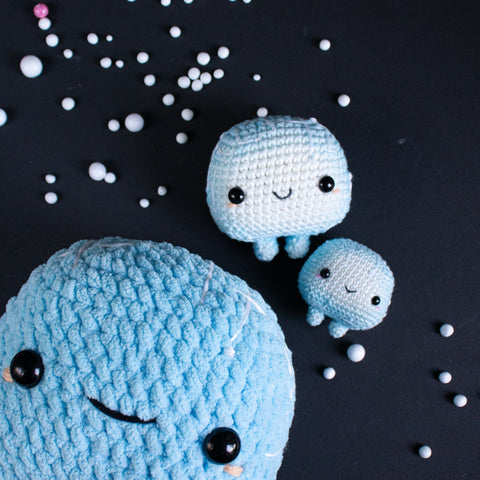
Chenille yarn is undeniably appealing. It hides uneven stitches, works up quickly and instantly turns simple shapes into cuddly plush toys. It’s especially popular for beginners, fast projects or gift-worthy amigurumi.
And yes – chenille photographs beautifully. Social media loves fluff. But chenille is almost always synthetic, usually polyester. And that’s where things get complicated.
Cotton & wool: the quieter alternatives
Natural fibers like cotton and wool don’t scream for attention. Stitches are visible. Imperfections stay visible. They’re less plush, less trendy. But they offer something else:
- durability
- breathability
- repairability
- biodegradability
An amigurumi made from cotton feels different. Less like a store-bought plush, more like a handmade object. Slower. More intentional. That’s something I personally value deeply.
My personal stance – and why it’s not a rule
I prefer working with natural materials – both in my creative work and in everyday life. Not out of perfectionism, but out of alignment. Whenever possible, I try to avoid using synthetics for yarns, stuffing or small details. Not because it’s “better”, but because it feels right to me. And that’s important: this is my choice, not a standard anyone has to follow.
What’s coming next
In the next parts of this series, we’ll explore:
- fluff vs. sustainability
- safety vs. natural materials
- trends vs. personal values
And also why there are absolutely valid reasons to choose synthetic materials, especially when crocheting for babies and young children.
This series isn’t about judgment. It’s an invitation to think, question and choose consciously. Because in the end, crochet isn’t just about what we make – but also how and why.